Visualizzazione post con etichetta art. Mostra tutti i post

mercoledì 3 agosto 2016

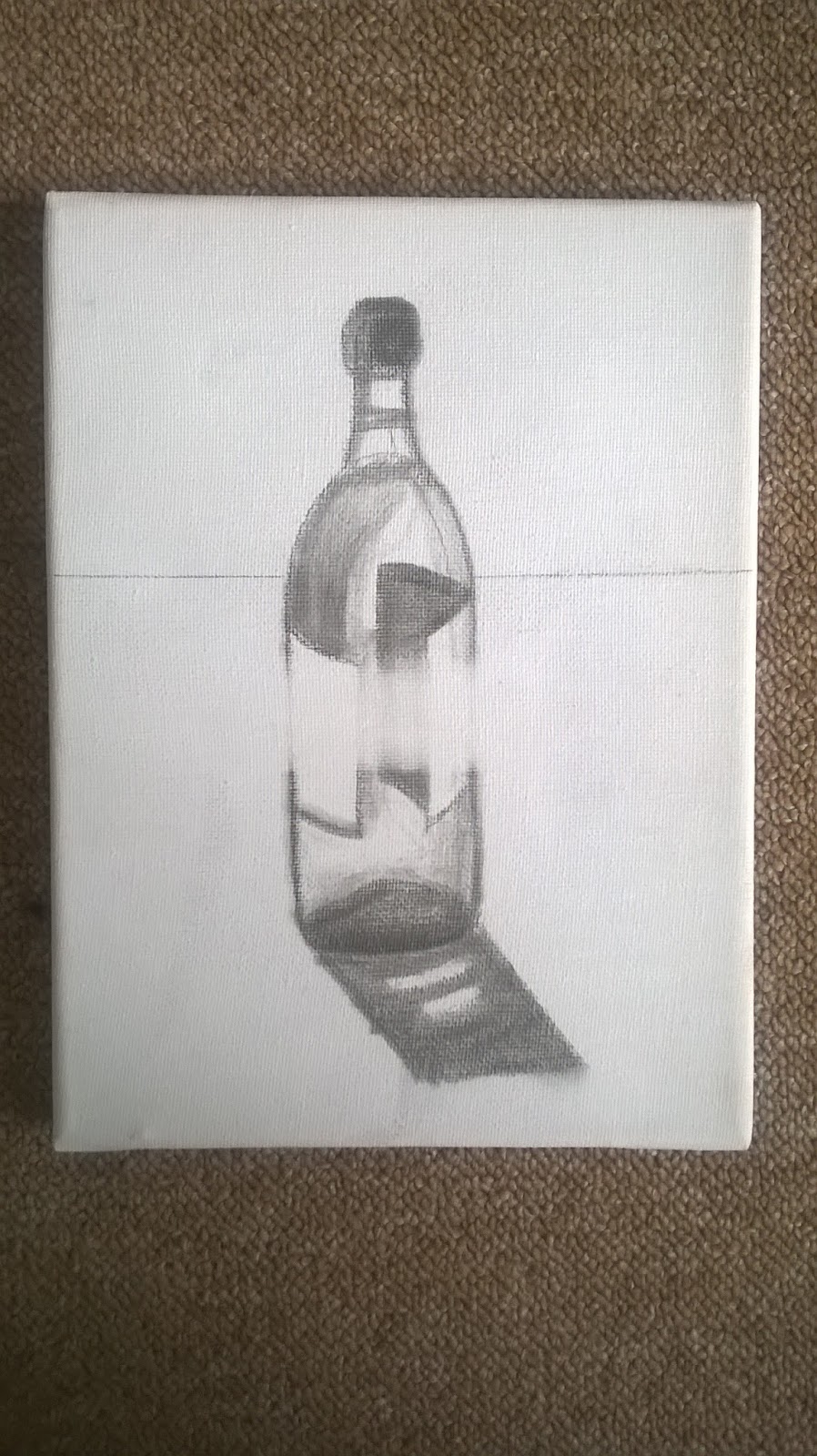
Carne di bambola sott'olio / Doll meat in oil


CARNE DI BAMBOLA SOTT'OLIO
Carne di bambola (1930), olio di semi, contenitore in vetro, stoffa, corda.
Roccioletti 2016

DOLL MEAT IN OIL
Doll meat (1930), seed oil, glass container, cloth, string
Roccioletti 2016

domenica 26 luglio 2015

A mortal danger - Amsterdam Art Magazine

There is this mortal danger: the wear of words.
If – on the one hand – the possibility of sharing the information in a simple and immediate (that is for “going to fast”, and not for “without mediation”) way favors its virality, to the other one it runs the risk of losing the sense of its active contents, which are such they are as constituted in practice.
And the practice of content requires a greater expenditure of energy then a simple click with the left mouse button. It’s easier to stop at the intention, thinking that we had done our part with giving simply a boost to information in order to move it again, but avoiding to get involved deeply, to truly realize the concepts, bringing them into the world.
We all agree, today, about the importance of sharing, we are all convinced that it is “a good thing” to spread important news to the circle of our friends, who would deny someone a “like” on a post, on a photograph? It’s all so simple, that becomes a commonplace and in its banality is not seen for what it is. The information bearier of content it’s a call to the action, not a call to just reaffirm. The network has given the impression that all are communicators and journalists, but there are few who “make” the facts about what – then – should speak communicators and journalists.
So it so happens that the abuse, misuse and recurrence of words (without that these really “happen”) soften the meaning and the importance of content, making it colorless and tasteless, as an appointment of love – postponed indefinitely – never really realized. Lacking participation, the “really do”, the “being present”.
When I was asked to become the editor of a webzine dedicated to the art in Amsterdam (and not only), for the umpteenth time I had to deal with a feeling hard to describe, but that – with time – I learned to communicate to others through a metaphor that takes its cue from the ancient Egyptian religion: the “psicostasis”. During his journey to the underworld, the soul of the deceased is at the presence of Anubis, laying on a side of the scale the heart of the deceased, and on the other side a feather (or Maat, who embodies the concepts of truth and justice). The soul of the deceased can continue its journey only if his heart is lighter than the feather.
Daily life, practical needs, the inertia of a social and cultural degradation, the difficulties to see the results of our efforts, the disappointed expectations: are all factors that lead us to think that “not worth it” ; as well as the objective difficulties to implement the concepts, the effort to get involved, to partake.
Still, I think we should do; the daily battle for art takes place on two fronts; new forms still to explore of the tomorrow’s creativity; and the perseverance to maintain firmly, through continuous practice, the positions won in this war absolutely unequal, according to the world and having high aspirations – and at the same time.

Psicostasis

C’è questo pericolo mortale: l’usura delle parole.
Se da un lato la possibilità di condividere l’informazione in modo semplice ed immediato (che sta per veloce, e non per “senza mediazione”) favorisce la sua viralizzazione, dall’altro si corre il rischio di perdere il senso fattivo dei suoi contenuti, che sono tali sono se si concretizzano nella pratica.
E la pratica dei contenuti richiede un dispendio di energie maggiore di un semplice click con il tasto sinistro del mouse. E’ più facile fermarsi all’intenzione, pensare di aver fatto la propria parte semplicemente dando una spinta all’informazione affinché si muova ancora, evitando però di mettersi in gioco profondamente, per realizzare davvero i concetti, farli venire al mondo.
Tutti siamo d’accordo, oggi, sull’importanza della condivisione, tutti siamo convinti che sia giusto diffondere una notizia importante al proprio giro di amicizie, chi negherebbe a qualcuno un like su un post, su una fotografia? E’ tutto così semplice da diventare di un banale che nella sua banalità non viene visto per quello che è. L’informazione, portatrice di contenuti, è un invito ad agire, non un invito a riaffermare e basta. La Rete ci ha dato l’impressione di essere tutti comunicatori e giornalisti, ma sono pochi quelli che “fanno” i fatti di cui – poi – dovrebbero parlare i comunicatori ed i giornalisti.
Accade così che l’abuso, l’uso improprio e la reiterazione delle parole (senza che queste accadano veramente) smussino il significato e l’importanza dei contenuti, li redano incolore ed insapore, come un appuntamento d’amore che – rimandato all’infinito – non si realizza mai veramente. Manca la partecipazione, il fare davvero, l’essere presenti.
Quando mi è stato chiesto di diventare il curatore di un webmagazine dedicato all’arte, per l’ennesima volta ho avuto a che fare con una sensazione difficile da descrivere, ma che – con il tempo – ho imparato a comunicare agli altri grazie ad una metafora che prende spunto dall’antica religione egiziana: la psicostasia. Durante il suo viaggio nell’aldilà, l’anima del defunto si trova al cospetto di Anubi, che pone su un piatto della bilancia il suo cuore e sull’altro piatto una piuma (ovvero Maat, che incarna i concetti di verità e di giustizia). L’anima del defunto può proseguire il suo viaggio solo se il suo cuore è più leggero della piuma.
La vita quotidiana, le necessità pratiche, l’inerzia di una realtà sociale e culturale in degrado, le difficoltà a vedere i frutti del proprio impegno, le aspettative deluse: sono tutti fattori che ci inducono a pensare che “non ne valga la pena”; così come le difficoltà oggettive a mettere in pratica i concetti, la fatica di mettersi in gioco, a partecipare.
Eppure, io credo che si debba fare; che la quotidiana battaglia per l’arte si svolga su due fronti; le nuove forme ancora tutte da esplorare della creatività di domani; e la costanza a mantenere saldamente, attraverso la pratica continua, le posizioni conquistate in questa guerra assolutamente impari, stando al mondo avendo aspirazioni elevate – e allo stesso tempo.

venerdì 12 giugno 2015

L'altrui sguardo / The eyes of the others

I asked six people to describe one of my artworks. This is the result: "L'altrui sguardo" [The eyes of the others]. You can listen to their interpretation of what they are watching, but you can not directly see the artwork...

Andrea Roccioletti
P-Ars 2015


sabato 6 giugno 2015

EFFACES - art is not immortal

EFFACES
art is not immortal

Art is not immortal. Perhaps it outlasts the lives of many,
nevertheless art will not escape the laws of physics.

The art ends, in a physical sense:
it is made of matter, and matter is transformed,
despite the best attempts to preserve it.

The art ends, in a conceptual sense:
the man changes, changing the views on an artwork.


There are artworks that materially challenge the time?

The artist arrange at his best, with tools and knowledge,
so the art resist as long as possible.
The pyramids will be eroded by the winds,
the Sistine Chapel needs restoration,
The Damien Hirst's Shark, in the long run, will rot.

There are artworks that materially follow the time?

Some artists create artworks that,
today instead that tomorrow, are different.
The landart, using natural materials - if not even organic - 
follows the rules of the transformation cycle.

There are artworks that materially are born with an expiration date?

Living in the actions of their creators,
and in the observation of their audience only for a certain period,
the performances may fall in this category;
remains photo documentation, or video,
but it is always matter, and it must be copied and reproduced
countless times in order to survive,
and who can say if in each subsequent copy
the underlying code to the meaning will fade or not.


There are artworks that conceptually challenge time?

The idea contained in some artworks is eternal,
perhaps because it binds to the archetypes 
rooted deeply in the human being.
Shakespeare's works speak
to the man of yesterday as to the man of tomorrow,
I wonder if, one day, the humankind will change to the point
of no longer recognize himself in the one
represented in these literary masterpieces.

There are artworks that conceptually follow time?

What it could be said changes
as well as changes the one who watches.
The universe observed by Ptolemy
will never be the same when it will be observed by Copernicus,
and who knows how many times it will change again;
it will remain the same, of course, and seeing it grasps different aspects;
but considering it in one way rather than another
causes a different act against it,
and so a different reaction from the universe.

There are artworks that conceptually are born with an expiration date?

Ideas that will not survive the time,
and will be only history, dead language.
Pharaoh was a god, now he no longer is;
my inner self it's so valuable today, tomorrow it will no longer exist.


We know about the entropy of the matter,
as well as the entropy of information.

A closer look, and the matter or the information
are in a state of non-entropy
according to  the human perception, or attribution:
if it is "useful" then it is not "entropy".

Yet, all the possible entropic states
of the matter and of the information
contain forms equally worthy to exist
that simply do not concern us
and our point of view about using them.

Some forms of matter and information
seem to be more resistant to the entropy of others;
the limit of social networks, on which easier becomes viral
the simple information, at risk of becoming superficial.

The physical medium of artworks, by its nature,
in the classical era has at its center the search for resistance to entropy;
in modern times, its fragility
about falsification, processing and disintegration
tells us of a world that has become heaving beneath our feet,
or requiring an evolutionary leap to accept its transience;

evolutionary leap that certainly will not leave our humanity intact.


sabato 9 maggio 2015

My wife, I and the Blue Klein

Before I can appreciate the monochrome

- the one of the Dadaists,
and then the one of the abstraction's construction of the early twentieth century,
the symbol of the absolute disembodied of Rothko,
the "white paintings" of Rauschenberg,
the "monochrome propositions" of Klein - 

I had to get away from home 1.150 km,
getting lost in cities that I did not know,
getting lost in dialogues of others in incomprehensible language,
lost in moods that I knew only by name
but I had never really tried:
homesickness, hope, loneliness, aliennes,

and finally I find myself writing in my notebook
leaning on the shopping cart
in a supermarket full of unknown product's brands,

writing that
a few days ago,
at the end of an exhausting day
entering with my wife in a stationery shop
she and I were in agreement
looking at some monochrome cardstocks
that it would be nice to get one

- maybe a blue, a blue klein -

and frame it
and hang it on the walls of our new home
and enjoy the single note that issues,
the absolute quiet of its pattern.


venerdì 8 maggio 2015

A mailart by Keith S. Chambers

A wonderful suspension of time permeates the composition, and a vertical movement ripples the cleaning and formal purity of the graphics and the monochrome, guiding the eye and thus the observer's interpretation, moving in search of meaning, seduced by the simplicity of the elements of the game.

shell > frog> monkey
sea > amphibious > ground
small > medium > great
breathe water > both > air
neural, simple > average > very complex
able to move slowly > to jump > walking
voiceless > few sounds > complex sounds and language

The wire that binds the frog to the shell  break the perspective's interpretation, bringing the viewer on a conceptual research and not just figurative. But is it a real wire? This artwork creates a vast territory free for interpretation, even with elements so real.


lunedì 4 maggio 2015

Assembly instructions

ASSEMBLY INSTRUCTIONS
Andrea Roccioletti
P-Ars 2015

The human being produces and makes use of assembly instructions.

The instructions are designed to optimize time and resources, and to share experiences aimed at achieving a purpose. So, the goals of human actions tend to the comfort:
to the creation of areas of ease, through objects, practices, forms of thought.

However, for various reasons, partly known and partly not, it seems that the instrumental and environmental comfort created by mankind does not fully meet all its needs, and in particular the deeper ones.

The use of instructions and the realization of pre-packed comfortable situations seems not always lead to an effective personal appeasement and evolution, at the expense of themselves, if not also the other.

I cut and remixed assembly instructions of a famous brand of low-cost, popular furnitures yet tending to design, creating a new aesthetic visual form, which nevertheless remains an end in itself, depriving the purpose of the initial object to put in front of the observer the uselessness. Uselessness which fortunately has the art, and that always brings us back to the real deep questions who can not find satisfaction in universal panaceas, expensive or affordable remedies, but only in the personal processing can be found, and with difficulty, if not answers, at least ways to go.


Now @ De Peper


SNAPSHOT - Andrea Roccioletti
@ De Peper, Overtoom 301,  OT301 Amsterdam

May, 2015
Tuesday: 18.00-01.00

Thursday: 18.00-01.00

Friday: 18.00-03.00
Sunday: 18.00-01.00


p-ars.blogspot.com
p-ars.com
depeper.org

Snapshot is a sort of great remixed “still image”
of the last 15 years of advertising campaigns
of various kinds, with their metaphors
and their imaginary, from drinks to clothing,
from contemporary art exhibitions to cars,
from deodorants to the awareness
about social important issues;
as well as the memory may remember:
in fragments, to misunderstandings
or with new relations of ideas,
adherent or totally divergent from the initial message
that the postcard advertising wanted to give.
The public can participate in deciding the destination of the fragments of the artwork,
which will be sent by post at the end of the exhibition.

De Peper is a non-commercial, not for profit
bioorganic vegan cultural kitchen
run by volunteers collective,
which experiments, develops
and provides a subcultural platform
for food, art and music.

A mailart by Eva Amity

A mailart by Eva Amity
Portland, USA

A silent and suspended flight fills the conceptual space of the Eva Amitty's mailart, a space "full" of a great stellar void.

A few simple elements create, in their combination, a pervading atmosphere. The fish, with its colors so alien, and yet absolutely natural, approached a century dress of the female figure; female figure wearing a dress near to the cultural tradition more classical, but with a face of the pop icons of contemporary advertising; a current "commercial face", and a classic suit, suspended in the vastness of the cosmos, blended with another living being so earthly and yet so alien and strange, distant.


A universe too vast to be explored with the measure of our human life, in new clothes and old traditions.


mercoledì 29 aprile 2015

martedì 28 aprile 2015

Vacuum bags full of empty vacuum

I stumbled into “Vacuum bags full of empty vacuum” working as assistant cook in a restaurant - then, metaphorically, giving up part of my work as an artist in favor of a job that would allow me to earn money, for necessities. I decided to exhibit them in frames purchased from low-cost chains of furnitures, the same low-quality frames that are purchased to frame family photographs, very common in homes: I searched the proximity to everyday experience. The performance-exhibition will ideally end when a gallery or an exhibition space will propose to its visitors, completing the transformation of the Vacuum bags full of empty vacuum from everyday object to ready-made. The function of the vacuum bags would be to preserve foods in time; I chose to seal them with no content to fall back on itself the object and its function; furthermore, the shape of the installation so structured takes audiences to some general reflections, on the fringes of the personal ones that everyone can give. First, in how our society interacts with the vacuum, with the absence, with the object waterproof, in an era of continuous osmosis between different media, and strong horror vacui by the lack of information. Second, I read a novel of Moorcock during my adolescence, “Elric of Melnibonè”: the protagonist reached the extreme limit of the explored lands, and it was his move beyond this boundary to create reality step by step. That chapter of the novel had anticipated the most modern theories of Heisenberg, about the observer that collapses the function wave of a quantum making crystallize it in a defined shape; the same happens when the public casts his gaze within an artwork, by redefining it with its own experience and sensitivity.


mercoledì 15 aprile 2015

SNAPSHOT @ De Peper


Snapshot is a sort of great remixed “still image” of the last 15 years of advertising campaigns of various kinds, with their metaphors and their imaginary, from drinks to clothing, from contemporary art exhibitions to cars, from deodorants to the awareness about social important issues; as well as the memory may remember: in fragments, to misunderstandings or with new relations of ideas, adherent or totally divergent from the initial message that the postcard advertising wanted to give.

You can participate in deciding the destination of the fragments of the artwork, which will be sent by post at the end of the exhibition. Please, take a post-it and write on it an address where you want to send the postcard of your choice. I will send it for you.


Info & contacts:

De Peper, Overtoom 301, OT301 Amsterdam
May, 2015
Tuesday: 18.00-01.00
Thursday: 18.00-01.00
Friday: 18.00-03.00
Sunday: 18.00-01.00

Call us to reserve your place.
Call us from 4pm to 7pm at 020 412 2954 or +31 20412 2954
to make your reservation. If you come without calling, we may not have food for you.
We serve food at 7, finishing at 8.30.
But we are open at 6!


De Peper is a non-commercial, not for profit bioorganic vegan cultural kitchen run by volunteers collective, which experiments, develops and provides a subcultural platform for food, art and music.

depeper.org


https://www.facebook.com/events/876790702363977/

--------------

Note: The addresses will not be archived nor used for other purposes
as well as the exhibition-performance.

--------------


giovedì 26 febbraio 2015

Dialogue between artists - second part


L: I think I maybe feel a little bit sick. oooo. really.

A: Maybe you're right. However, you can consider that the decay is only from a human point of view. For nature, it's just transformation :)

L: I will try to see this decay series a little bit more as natural transformation. Maybe, for me, it will be a one-time-only experience.

A: I think it's so interesting the discussion about impermanence, also in art. It fits well with your consideration about the one-time-only experience.

F: And I think that impermanence in mail art is particularly true. Open mail art, read mail art, blog mail art, put it in a draw. Sometimes put it on a wall. Sometimes repurpose it. How many times does anyone look at mail art received or blogged yesterday? Last week? Last year?

A: Very interesting what you write, F. and very true. I would say that we could expand in this way the discussion: distinguish between the problem of "conservation", the intent of the artist (if it persists over time or not), and finally the impermanence physical, material, of the art "object".

L: Paper ephemera is something I use a lot in art -- it's nearly my favorite thing to use. The expectation of impermanence and the daily deterioration of papers helps me feel the immediacy of a project; its transient quality and the freshness of execution necessary. The Japanese have a similar approach and philosophy behind some of their art and culture: the transient nature of life, and the beauty of its decay and change, though it seems their sensibility is more bittersweet than mine. To me, impermanence, transience, immediacy and necessary freshness give cause for celebration and joy: babies are wondrously beautiful, but they do turn into us. Oh my. Andrea, I was thinking about what you said of "the intent of the artist (if it persists over time or not)." Do you think of intent as a concrete thing? Or is artistic intent also ephemeral, not a point on a line, but a morphing of the artist's wisdom?

D: The view of the majority of critics is that the intention of the artist or author has little or no impact on the meaning of the work of art. That meaning is a construct of social, cultural, economic, blah blah forces. Comes from a well known essay from 1940s which is pretty much universally accepted now.


L: D., I have not read the essay, but will do so later. For now, I say, and believe, that intention is a quality to itself, and the degree to which intention is a part of a work of art depends on the success or failure of the artist to embody that intent within the work. Ineptitude, naivete, or whatever, may prevent the manifestation of the artist's intent. That said, I believe that to the most discerning eye, the artist cannot hide who she/he is in their work. And then, beyond even that, is the work itself, sort of suspended in space, turning and seen from all directions as a thing of power and meaning. Or not.

D: L., that's a pretty dull essay they make people read in school. The concept might be enough.
Reading interviews and artist statements about intent will always be popular. I think a main idea is that meaning has more to do with how you (or I) perceive the work than what the artist tells us we should think about the work. And I agree - visual artists are often very disappointing when explaining what they were doing. Some times they don't even know, and they admit it. Sometimes they lie. (I wouldn't believe a word Andy Warhol said was sincere.) Ever read Jackson Pollock explain cogently what he did? The critics had to do that for him. I don't mean to suggest censoring an artist's statement of intent. Ultimately, I don't take it vert seriously. I look at the work. Hard.

L: Ok D. Glad to skip it. And I agree. The art does, and has to, stand alone. Still, without context, artistic expression may lose a great deal of its meaning. And intent is part of that context.

A: Can I give one last tip to the discussion?
As well as in communication, there is a verbal part (conscious) and a non-verbal component (unconscious), so also in an artwork the artist transmits part of his unconscious, unwittingly and without realizing it. And I am certain that the viewers (without realizing it) perceives it. There is thus a kind of silent dialogue between artist and viewers, which remains unknown but real because it goes to increase the unconscious of the "users" of arts.

L: Yes, I agree, and I know I experience that.  After having viewed some art, I feel my perception subtly changed, though not in any way I can pinpoint. like something passing between me and a bright light, too fast to catch, but feel the ripple of shadow. More poetry than analysis.

A: Perhaps one of the key aspects of the art, because it can be called such, is precisely to bring into play both hemispheres, both the rational that the creative one. Still, I think it is even more mysterious, as if each of us, all the time, contributed to the collective imaginary, reworking and giving back to the world. Without knowing it.

L: As if artists are all engaged in an amorphous, 'butterfly effect,' process that, over time, develops and changes the collective perception?

A: ...and changes also the artists, because they get feedback about how viewers and, in general, society consider their art, in a way or another.

F: Interesting comment earlier in the discussion about changes in the materials themselves. Sometimes as I sift through my received box, a delicate piece may fall off, or tear a little. And I took down a card I made from my wall to replace it with something more recent, and couldn't believe how much it had faded in one year. I don't use archival quality printing ink, but still, I was surprised.

A: Two thoughts about.
The first: the ideas can ride the matter, but since the matter is destined to become, that is, to change the form that we gave, ideas must also transmigrate: in other minds, so that they can survive the impermanence of matter , change, grow. The second: Perhaps there is no time capsule big enough to hold all the meaning that we give to a work: so, it is always a choice, partial, representative, symbolic, never complete.


L: That was a pretty good tour, Andrea, for it being "Not a Tour."  I probably missed something. Not the first time.

A: Always happy that you like it. And, don't worry... I'm sure you don't miss anything :)

L: Andrea, I do admit that sometimes I'm concerned that all my comments on IUOMA are a little tiresome for people. It's just that when I see things in the photo gallery that interest me, I feel that the artist would like to know -- I would like to know, myself, if someone found my art interesting. I do sometimes wonder a little bit  why there is so little commentary even though there are so many members.

A: Your comments are always welcome, L. The fact that there are many users but few comments... I would not be obnoxious... but I think it's because it's easier to share art rather than staying behind the art of others. And then, let's not forget the "agonistic" component... in any case, I think in general it's because the role of "viewer" is seen as less participatory and creative than it is in reality.

L: What you say makes sense. I was just thinking, also, that commentary is a way of building community on the IUOMA site. We lose a little of our anonymity when we put ourselves out there with an opinion or query. It isn't always comfortable to express thoughts in writing.

More here on IUOMA site.


venerdì 23 gennaio 2015

Dialogue between artists


L: You made me work on this series. There really is a meaninglessness when things are dissected and viewed out of context. Even words cannot convey meaning when they are seen (or heard) out of place. Context may not be everything, but it is quite a bit.

A: Yes, the point is: how are we addicted to context, and manipulation of it (as media do on us?) so I think that the art must be (not only, instead) decorative, but also NOT design. Art is uncomfortable.

L: I really do always look for narrative in the art, don't I? I guess, from what you are saying, that 'comfortable art' might just be art being viewed out of context? Out of the setting/circumstances in which it can be most effective (whether or not the setting is of the artist's intentions).

A: I believe that the search for a narrative sequence is common to all human beings. It 'a form of evolutionary adaptation that serves to survival. I do not think that we choose to use this view, we are inclined to do so. About the word "comfortable", I have to explain. I think the design is comfortable: it has to "look after" the human being, coming to meet him. The art, however, often is "annoying": trying to get us out of our habits, our common ways of seeing, from our comfort zone. It has to communicate the right part with the left part of the brain. The context is another concept strongly rooted in our culture. An art gallery is a "context" that gives credit to the work of art. There are other contexts that give a different hint to understand art: think of those hanging on the walls of a restaurant. Finally, what about the works that, in the last century, usually break through the barriers and begin to permeate the network, or are "made" of shares, or collaborations? The art  continuously  goes beyond definitions and containers that we assign. If it does not, is not art but decoration.


L: In English, "Vent" has more than one meaning. In this series, the right half of each piece exemplifies shouting without meaning -- "venting". All capital letters and stark black and white create the shout. The left hand of each piece seems to be a pair of little windows that can let air through, 'ventilating' the places we can only glimpse slightly. To me, the right hand is loud, the left quiet. But both "Vent"

A: First at all, thank you for your comments. I appreciate a lot, and it's very useful for me to have a feedback from someone like you. So, thanks, I hope I can send you something as soon as possible. Yes, you are right. The title of the serie is exactly what you mean. This is a good news. The other news (bad? Don't know) it is that I'm thinking about this fact that the title is a sort of contextualisering of the artwork. It is not just a problem for me, but also for all the contemporary artists. So, let's think about that...


L: I think the grey paper foundation does so much to make each composition a harmonious whole. The colors in the flowers bring life to them.  I am wondering if this series is about approaching God? It's what it looks like to me, but I don't really know.

A: It is very interesting that, for our culture, our mind is in search of a narrative meaning of a work; and, in particular, from left to right. I think there are some mental forms in ourselves with which we have to compromise, as artists but also as public and observers. For the rest, you are right: I think the the flowers - metaphorically, the living matter, colored - is a vital turning. There is also a trascendent component, in the images... but the written parts come from a book about Second World War. So, we have the trascendent, the human decisions (also bad) and also the nature in her vitals forms - but not free as us. If this is a way to try to approaching the divinity... maybe yes.


L: Ciao Andrea! another really good series. As I viewed the 'Omens', I realized I couldn't decipher the code, again! Ha ha! the red tags mislead, lulling me into a false sense of happy. The creepy symbols and the little window views don't let me stay happy. As I go from one to the next, I feel like the scary music is getting louder and louder...

A: I love codes. I have an hobby, to listen shortwaves, coded messages, and try to decode them. In my videos, on my Youtube channel, often I use registration of shortwaves on Khz. In this particular artwork, I try to re-present the question of ours expectation for the future... so, the tarots... juxtaposed to natural elements, that are predictable in their life cycle. About scary music... why not ;)


L: The arrangements and colors are so playful.

A: Thank you. There is also another fact: the inscriptions are assembled so as not to be read, in Italian, as if they were a different language, or mispronounced.

L: I was thinking of that. I tried to translate, but got nowhere, so I assumed they were meant to be absurd or nonsensical.

* * *


martedì 13 gennaio 2015

Why am I an artist? / Perché sono un artista?

Why am I an artist?

Art is like the moon; the artist is an astronaut who, inside his space capsule, makes an orbit around it; and there is a period during which he flies over the dark side of it; the artist / astronaut sees things that others, from Earth, can not; however, he can tell when he will be returned at telecommunications, on the illuminated side. Then he can tell everyone that the other side of the moon / of the art is not so different from what we see, or that is populated by green beings with antennas instead of ears.


I discovered me as an artist when I realized that, among other things, I did not trust most of what they were telling me.

----------

Perché sono un artista?

L'arte è come la luna; l'artista è un astronauta che, dentro alla sua capsula spaziale, compie un'orbita attorno ad essa; e c'è un certo periodo durante il quale si trova a sorvolarne il lato oscuro; l'artista / astronauta vede cose che gli altri, dalla Terra, non possono; tuttavia potrà raccontarle quando sarà di nuovo a portata di telecomunicazioni, sul lato illuminato. Allora potrà dire a tutti che la faccia nascosta della luna / dell'arte non è poi così diversa da quella che si vede, oppure che è popolata da esseri verdi con le antenne al posto delle orecchie.

Mi sono scoperto artista quando ho capito che, tra le altre cose, non mi fidavo più di quello che mi raccontavano.


"At first", Collage, P-Ars 2015

giovedì 8 gennaio 2015

Malleability


This pen is impermanent. This agenda is impermanent. Plastic, ink and paper, each according to its chemical characteristics, each according to physical events which will face, sooner or later give up their form, the form that for various purposes has been given by the man; no longer called plastic, ink and paper, but something different. The keyboard with which I copy what I wrote on the agenda is impermanent; the screen that returns me information of what is happening inside the computer into machine language is impermanent; the hard disk on which are stored sequences of 1 and 0 is impermanent. All the tools and support to make the matter thought, or all the tools to transform the matter according to the thought, are impermanent. However, if all the matter was not permanent, it is not possible to give it a form; Therefore, it is thanks to impermanence of matter that we can shape it, and profit from its provisional configuration. Perhaps the universe suggests that everything flows; and that in this flow in transformation, thanks to the evolution of the subject, the effort to create stable systems, and the ability to create copies, there is in some form a survival. All this leads us to consider in another perspective the concepts of identity and possession, even in the context of art. Like it or not, as far as we can try to lengthen her life, even the Mona Lisa is impermanent.


lunedì 5 gennaio 2015

Forecast and not

Even if, as a component in the communication is non-verbal and unconscious, so also in art a part of the final result escapes the intent or the forecasts of the artist; of these unexpected results intrigue me the causes, not the ones that we can define rooted (training, personal history) but those momentary, accidental: Leonardo also had toothache, will also Caravaggio had indigestion, a gloomy day will have saddened Tiepolo ; and if, and how deep, these accidents have left traces in their works; or can be ignored these temporary situations, if they were able, and if something of this resistance is left in the work, and so on.